
Introduction to Blockchain Technology
Let’s be honest—blockchain technology sounds complicated. The word itself feels technical, almost intimidating. But what if I told you that at its core, blockchain is actually a simple idea? It’s just a new way of recording and sharing information. That’s it. No smoke, no mirrors.
Think of blockchain like a digital notebook that’s shared among thousands of people. Every time someone writes something in it, everyone else sees it. Once it’s written, it can’t be erased. Sounds powerful, right? That’s exactly why blockchain is transforming industries across the globe.
In today’s digital world, trust is everything. We shop online, send money digitally, store our data in the cloud—but we rely on central authorities like banks, tech companies, and governments to manage and secure that information. Blockchain flips this model upside down. Instead of trusting one central authority, we trust the system itself.
And here’s the kicker: that system is decentralized. No single person controls it. No single entity can manipulate it. It runs on mathematics, cryptography, and consensus mechanisms that ensure fairness and security.
But how did this all start? Why is everyone—from startups to Fortune 500 companies—talking about it? And most importantly, how does it actually work?
Let’s break it down step by step.
What Is Blockchain in Simple Terms?
Imagine a Google Doc that is shared with thousands of people. Every time someone makes a change, it updates for everyone instantly. But here’s the twist—once a piece of information is added, it can never be deleted or altered. That’s blockchain in its simplest form.
A blockchain is a digital ledger. A ledger is just a record book. Traditionally, banks maintain ledgers to track transactions. Governments maintain ledgers to track property ownership. Businesses maintain ledgers for accounting. Blockchain takes that idea and makes it digital, transparent, and decentralized.
Here’s how it works in plain language:
- Transactions happen.
- They are grouped into a “block.”
- That block is verified by a network of computers.
- Once verified, it is added to a “chain” of previous blocks.
- The information becomes permanent.
Each block contains data, a timestamp, and a unique code called a hash. This hash connects one block to the next—like links in a chain. If someone tries to tamper with a previous block, the hash changes, and the network immediately detects it.
This is what makes blockchain secure. You can’t secretly edit history.
Unlike traditional databases that are controlled by one authority, blockchain is distributed across many computers (called nodes). Everyone has a copy of the ledger. That’s why it’s often called a distributed ledger technology (DLT).
In short, blockchain is:
- Transparent
- Secure
- Decentralized
- Immutable
And that combination? It’s revolutionary.
Why Blockchain Matters in Today’s Digital World
Let’s face it—we live in a trust crisis. Data breaches happen every day. Banks get hacked. Social media platforms misuse personal data. Governments struggle with transparency. So naturally, people are asking: can we build systems that don’t require blind trust?
Blockchain answers that question with a bold “yes.”
The power of blockchain lies in removing intermediaries. Think about sending money internationally. Normally, banks, payment processors, and currency exchange systems get involved. Each one takes time. Each one charges fees. Blockchain allows peer-to-peer transactions without middlemen.
That’s a big deal.
But it’s not just about money. Blockchain can track supply chains, ensuring that food is organic or diamonds are conflict-free. It can store medical records securely so patients control their own data. It can even power voting systems that are tamper-proof.
In a world where digital transformation is accelerating, blockchain acts like the backbone of trust. It ensures:
- Data integrity
- Security through cryptography
- Transparency across networks
- Reduced operational costs
Major corporations like IBM, Microsoft, and Amazon are investing heavily in blockchain infrastructure. Governments are exploring central bank digital currencies (CBDCs). Startups are building decentralized apps (dApps) that operate without central servers.
Why? Because blockchain represents the next evolution of the internet—often called Web3.
If Web1 was about reading and Web2 was about interacting, Web3 is about owning. Owning your data. Owning your assets. Owning your identity.
That shift changes everything.
The History and Evolution of Blockchain
Every revolutionary technology has a starting point. For blockchain, that starting point was 2008.
An anonymous individual—or group—using the name Satoshi Nakamoto released a whitepaper titled “Bitcoin: A Peer-to-Peer Electronic Cash System.” The goal was simple: create a financial system that didn’t rely on banks.
In 2009, Bitcoin launched. It was the first successful implementation of blockchain technology. At first, very few people understood it. Some thought it was a passing trend. Others dismissed it as internet money for tech geeks.
But behind Bitcoin was something much bigger—the blockchain itself.
Bitcoin proved that decentralized digital money was possible. But developers soon realized the underlying technology could do far more than just process payments.
In 2015, Ethereum entered the scene. Created by Vitalik Buterin, Ethereum expanded blockchain’s potential by introducing smart contracts—self-executing agreements written in code.
That changed everything.
Now, instead of just transferring value, blockchain could execute logic. It could power applications. It could automate agreements without lawyers, banks, or intermediaries.
From there, innovation exploded:
- 2017: ICO boom
- 2020: DeFi (Decentralized Finance) surge
- 2021: NFTs enter mainstream
- 2022 onward: Enterprise blockchain adoption grows
Today, thousands of blockchain platforms exist. Some focus on speed. Others prioritize security or scalability. But they all share the same foundational idea: decentralized trust.
Blockchain has evolved from a niche experiment into a global movement.
And it’s still just getting started.
How Blockchain Technology Works

Now let’s dig deeper. How does blockchain actually function behind the scenes?
At its core, blockchain combines three key technologies:
- Cryptography
- Distributed networks
- Consensus algorithms
When someone initiates a transaction—say, sending cryptocurrency—it doesn’t go to a central server. Instead, it’s broadcast to a network of computers called nodes.
These nodes validate the transaction using predetermined rules. If the transaction meets the criteria, it’s grouped with others into a block.
Before being added to the chain, the block must be verified through a consensus mechanism. In Bitcoin, this is called Proof of Work (PoW). In other networks, it might be Proof of Stake (PoS).
Once consensus is reached, the block is added permanently to the chain. Each block references the previous one using its hash, forming an unbreakable link.
Here’s a simplified flow:
- Transaction initiated
- Transaction broadcast to network
- Nodes validate transaction
- Block created
- Consensus achieved
- Block added to chain
This system ensures that no single entity can control the ledger. To alter past records, someone would need to control the majority of the network’s computing power—a near-impossible task in large blockchains.
The beauty of blockchain lies in this balance between transparency and security. Everyone can see the transactions. But no one can tamper with them.
It’s like writing in permanent ink—except the entire world can verify what’s written.
And that’s why blockchain is redefining digital trust.
Key Components of a Blockchain Network
Blockchain might look magical from the outside, but under the hood, it runs on a few powerful components working together like gears in a clock. Remove one, and the whole system struggles. Understand them, and suddenly blockchain feels far less mysterious.
At the heart of every blockchain network are nodes, consensus mechanisms, cryptography, and smart contracts. These aren’t just technical buzzwords—they’re the pillars that keep everything running smoothly.
Think of a blockchain network like a neighborhood watch system. Everyone participates. Everyone verifies. No single person makes the rules alone. Instead, the system relies on collective agreement.
Here’s a quick breakdown of the core components:
| Component | Purpose | Why It Matters |
|---|---|---|
| Nodes | Computers that maintain the blockchain | Ensure decentralization |
| Consensus Mechanism | Agreement protocol | Prevents fraud |
| Cryptography | Secures transactions | Protects data integrity |
| Smart Contracts | Self-executing code | Automates trust |
Without nodes, there’s no distribution.
Without consensus, there’s no agreement.
Without cryptography, there’s no security.
Without smart contracts, there’s no automation.
Each part plays a unique role in making blockchain decentralized, secure, and trustworthy. And when they work together? That’s when blockchain truly shines.
Let’s zoom in further.
Nodes and Their Function
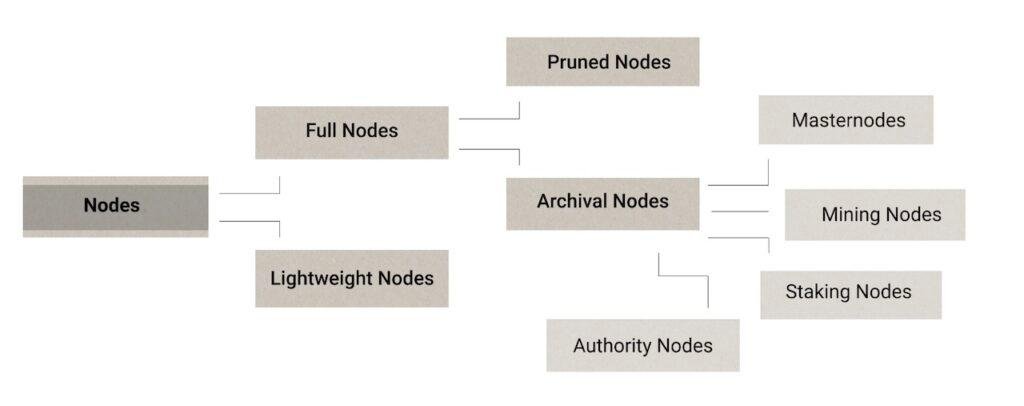
Imagine blockchain as a massive shared spreadsheet. Now imagine thousands of computers across the world storing identical copies of it. Those computers? They’re called nodes.
A node is simply a device connected to the blockchain network. It can be a powerful server or even a personal computer. What makes it special is that it maintains a copy of the entire blockchain ledger.
Why does this matter?
Because decentralization depends on it.
Instead of storing data in one central location (like a bank server), blockchain distributes data across thousands of nodes. If one node fails, the network keeps running. If someone tries to manipulate one copy, the others reject the change.
There are different types of nodes:
- Full Nodes – Store the complete blockchain and validate transactions
- Light Nodes – Store partial data for faster operation
- Mining Nodes – Compete to validate blocks (in PoW systems)
- Validator Nodes – Stake tokens to validate blocks (in PoS systems)
Nodes constantly communicate with each other. When a new transaction occurs, it’s broadcast across the network. Nodes verify it independently. If the majority agree it’s valid, it moves forward.
This distributed verification process removes the need for a central authority. No bank approval. No government oversight. Just math and majority agreement.
And here’s the fascinating part: anyone can run a node on most public blockchains. That openness strengthens transparency and resilience.
Nodes are like the guardians of the blockchain. Quietly working in the background, keeping everything honest.
Consensus Mechanisms (PoW, PoS, and More)
Now comes the big question: how do thousands of nodes agree on what’s true?
That’s where consensus mechanisms come in.
A consensus mechanism is simply a method the network uses to agree on the validity of transactions. It ensures everyone stays on the same page.
The two most popular mechanisms are:
Proof of Work (PoW)
Used by Bitcoin.
Here, miners compete to solve complex mathematical puzzles. The first one to solve it gets to add the new block and earn a reward.
Pros:
- Extremely secure
- Battle-tested over time
Cons:
- Energy-intensive
- Slower transaction speeds
PoW is like a digital race. It’s secure because solving the puzzle requires enormous computing power.
Proof of Stake (PoS)
Used by Ethereum (after its upgrade).
Instead of mining, validators “stake” cryptocurrency as collateral. The network randomly selects validators to confirm transactions. If they act dishonestly, they lose their stake.
Pros:
- Energy-efficient
- Faster than PoW
Cons:
- Can favor wealthy participants
Beyond these, there are other mechanisms like:
- Delegated Proof of Stake (DPoS)
- Proof of Authority (PoA)
- Practical Byzantine Fault Tolerance (PBFT)
Each has trade-offs between speed, decentralization, and security.
Consensus is what keeps blockchain honest. It’s the digital equivalent of democracy—majority rules, and fraud gets rejected.
Without consensus, blockchain would collapse into chaos.
Smart Contracts and Automation
Now we reach one of blockchain’s most exciting innovations: smart contracts.
A smart contract is a self-executing agreement written in code. It automatically runs when specific conditions are met. No middleman. No paperwork. No delays.
Think of it like a vending machine.
You insert money. You select a snack. The machine verifies payment and automatically delivers the product. No cashier required.
That’s how smart contracts work.
For example:
- If payment is received → transfer ownership
- If shipment confirmed → release funds
- If vote count complete → publish results
These contracts live on the blockchain, meaning they are transparent and tamper-proof.
Smart contracts power:
- Decentralized Finance (DeFi) platforms
- NFT marketplaces
- Gaming ecosystems
- Supply chain automation
- Insurance claims processing
Because they eliminate intermediaries, they reduce costs and increase efficiency.
But here’s the catch—code must be flawless. A bug in a smart contract can lead to major losses. That’s why auditing is critical.
Still, the potential is massive. Smart contracts transform blockchain from just a ledger into a programmable platform.
They don’t just record trust. They execute it.
Types of Blockchain Networks
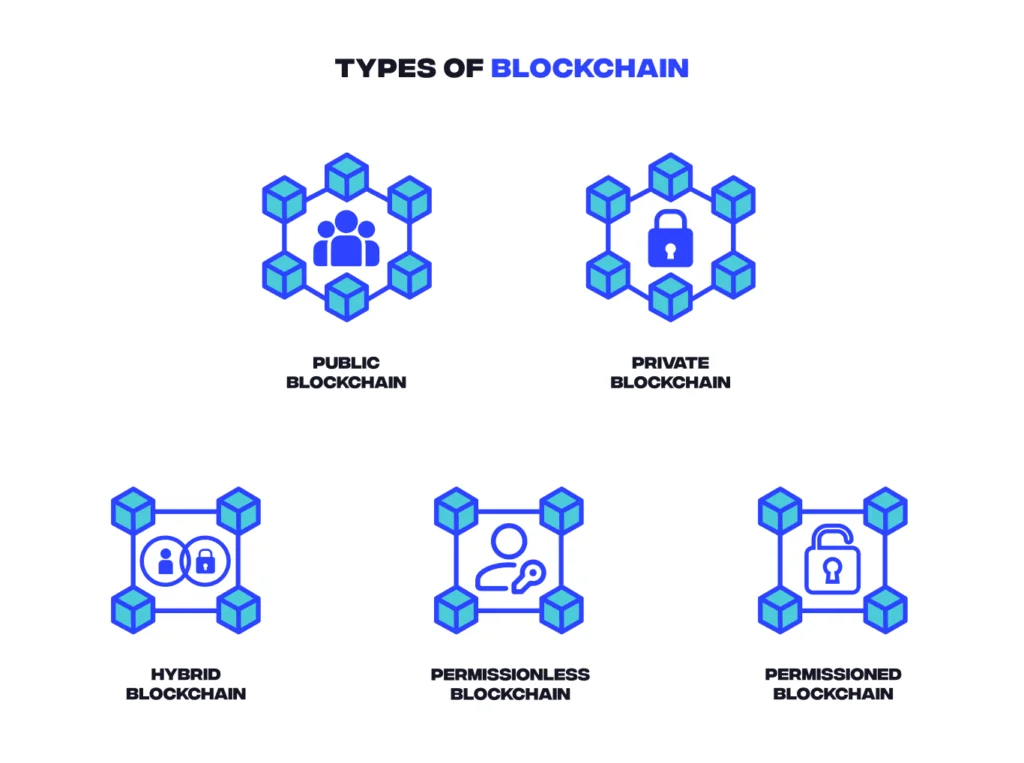
Not all blockchains are created equal. Depending on the use case, different types of networks exist.
Let’s break them down.
Public Blockchains
These are open to everyone.
Examples: Bitcoin, Ethereum.
Anyone can:
- Join the network
- Validate transactions
- View the ledger
Public blockchains prioritize decentralization and transparency. They are secure but can be slower due to high participation.
Think of them as public parks—open to all.
Private Blockchains
Private blockchains restrict access. A single organization controls who can participate.
Used by:
- Enterprises
- Corporations
- Government institutions
They are faster and more efficient but less decentralized.
Think of them as private office buildings—controlled entry.
Consortium and Hybrid Blockchains
These are controlled by a group of organizations rather than one.
Used in industries like:
- Banking
- Supply chain
- Healthcare
Hybrid blockchains combine public transparency with private control.
Choosing the right type depends on goals. Do you want openness? Or efficiency? Or both?
Blockchain is flexible enough to support them all.
Benefits of Blockchain Technology
Why is blockchain gaining so much attention?
Because it solves real problems.
Here are its core benefits:
Transparency and Trust
Every transaction is recorded on a public ledger. Anyone can verify it. That transparency builds trust naturally.
Security and Immutability
Blockchain uses cryptographic hashing. Once data is added, it cannot be altered without network consensus.
This makes fraud extremely difficult.
Decentralization and Efficiency
By removing intermediaries, blockchain reduces:
- Costs
- Delays
- Points of failure
It streamlines processes and improves speed.
In a world demanding accountability, blockchain offers a foundation built on integrity.
Real-World Applications of Blockchain
Blockchain isn’t just theory. It’s already transforming industries.
Finance and Banking
- Cross-border payments
- Decentralized lending
- Digital currencies
Banks use blockchain to settle transactions faster and cheaper.
Supply Chain Management
Companies track goods from origin to shelf. Consumers verify authenticity.
Imagine scanning a QR code and seeing a product’s entire journey.
Healthcare and Medical Records
Blockchain secures patient data while giving individuals control.
No more scattered records across hospitals.
Voting Systems and Governance
Tamper-proof voting increases election transparency.
Imagine elections with zero fraud concerns.
That’s the promise.
Challenges and Limitations of Blockchain
Blockchain isn’t perfect.
Challenges include:
- Scalability issues
- Regulatory uncertainty
- Energy consumption (in PoW systems)
- Complexity of integration
Mass adoption requires solving these hurdles.
But innovation continues.
The Future of Blockchain Technology
Where is blockchain headed?
Toward:
- Web3 ecosystems
- Tokenized assets
- Central Bank Digital Currencies
- Decentralized identity systems
Blockchain may become as fundamental as the internet itself.
We’re still early.
Blockchain vs Traditional Databases
| Feature | Blockchain | Traditional Database |
|---|---|---|
| Control | Decentralized | Centralized |
| Transparency | High | Limited |
| Immutability | Yes | No |
| Speed | Moderate | High |
Traditional databases excel in speed. Blockchain excels in trust.
Different tools for different jobs.
How to Get Started with Blockchain
Interested?
Start by:
- Learning basic cryptography
- Exploring Bitcoin and Ethereum
- Trying a crypto wallet
- Studying smart contract development
- Following blockchain communities
The barrier to entry is lower than ever.
Common Myths About Blockchain
Myth: Blockchain is only about Bitcoin.
Reality: It powers countless applications.
Myth: It’s anonymous.
Reality: It’s pseudonymous and traceable.
Myth: It’s unhackable.
Reality: Networks are secure, but applications can have vulnerabilities.
Understanding the truth clears confusion.
Conclusion
Blockchain technology is more than digital currency. It’s a new framework for trust in the digital age. By combining decentralization, cryptography, and consensus, blockchain eliminates the need for blind faith in central authorities.
From finance to healthcare, supply chains to governance, its impact is expanding rapidly. Yes, challenges exist. But innovation rarely arrives without friction.
We’re witnessing the early chapters of a technological revolution. And like the internet in the 1990s, blockchain’s full potential is still unfolding.
The question isn’t whether blockchain will matter.
The question is: how will you use it?
FAQs
1. Is blockchain technology secure?
Yes, blockchain uses cryptography and consensus mechanisms that make tampering extremely difficult.
2. Can blockchain exist without cryptocurrency?
Absolutely. Cryptocurrency is just one application of blockchain technology.
3. What industries benefit most from blockchain?
Finance, healthcare, supply chain, real estate, and government sectors see major benefits.
4. Is blockchain legal?
Blockchain technology itself is legal in most countries, though regulations vary for cryptocurrencies.
5. Will blockchain replace banks?
Not entirely. But it may significantly reshape how financial systems operate.

Markazf.xyz is a dedicated crypto education platform, helping beginners and experienced users understand blockchain, cryptocurrencies, trading, and DeFi. Our goal is to provide clear guides, tutorials, and the latest updates to make crypto learning simple, safe, and effective.